
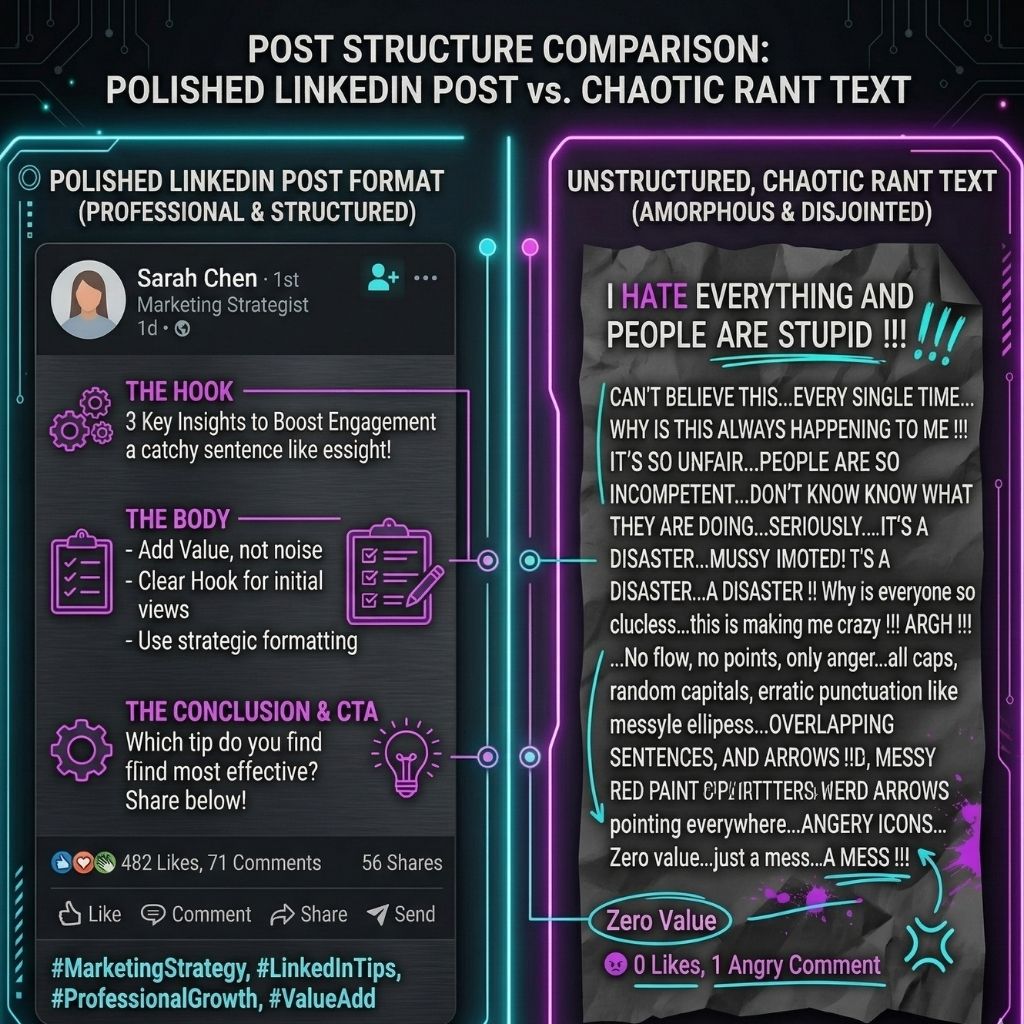
“Be authentic.” It is the most common, and arguably the most dangerous, advice given to founders building a personal brand online. While corporate speak is dead and audiences crave human connection, there is a very fine line between strategic vulnerability and unprofessional oversharing. Navigating this boundary on platforms like LinkedIn is what separates respected thought leaders from those who go viral for all the wrong reasons.
The difference between vulnerability and venting
Strategic vulnerability is sharing a past failure or a difficult business lesson to educate your audience. It demonstrates humility and growth. For example, detailing a failed product launch and explaining the three operational lessons you learned is highly valuable content. Venting, however, is sharing raw, unprocessed emotion. Complaining about a specific client, a recent layoff, or a bad day at the office without offering a constructive takeaway only damages your credibility.
You’ll typically see the most successful executive brands utilizing a “scars, not open wounds” approach. They speak openly about the hard times, but only after they have navigated through them and can offer the audience a clear, actionable resolution.
Maintaining the executive presence
Your personal brand must ultimately support your company’s objectives. This means your online persona cannot stray too far from how you conduct yourself in a boardroom. While it is great to show personality—sharing a hobby, a family milestone, or a passionate opinion on industry news—it must be anchored by an executive presence.
If your feed becomes dominated by hot takes, political commentary, or constant personal struggles, you risk alienating investors and enterprise clients who are looking for a steady, reliable leader. Authenticity does not mean publishing every thought that enters your head; it means ensuring the thoughts you do publish are genuinely yours and professionally framed.
Selecting the right channels for the right message
Not every marketing channel requires the same level of polish. A deeply insightful, structured essay about your industry’s future belongs on LinkedIn or your executive newsletter. A quicker, more casual observation about an industry event might perform perfectly on X (Twitter). By understanding the nuance of each platform, you can present a well-rounded, authentic founder brand without ever crossing the line into unprofessionalism.
What do you think?
Strive to design environments with clarity in mind: Clear instructions, a logical layout, and control over the pace of interactions can all contribute to a more manageable cognitive load.
As designers and developers venture into these new domains, carrying the principles of accessibility forward should be about more than just compliance with guidelines, but rather championing a spirit of inclusivity.