
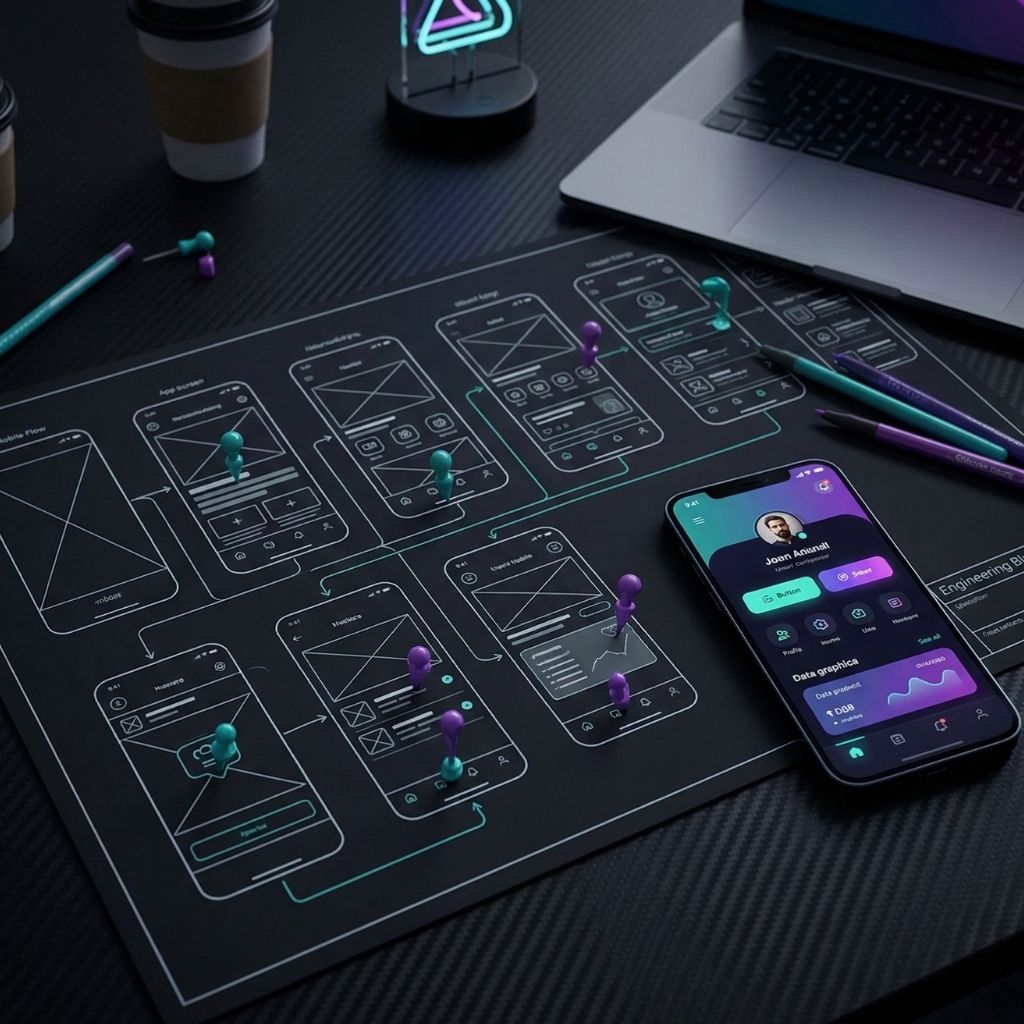
Founders love to talk about features. When conceptualizing a new mobile app, the roadmap is usually packed with complex functionalities, integrations, and capabilities. But features don’t retain users; experiences do. In a crowded app store where competitors are just a tap away, exceptional User Experience (UX) is no longer a “nice-to-have” design phase—it is the single most important retention metric your business has.
The psychology of app abandonment
Users are ruthlessly impatient. If an app takes more than three seconds to load, requires a confusing multi-step tutorial just to sign up, or hides its core value behind cluttered menus, the user will delete it. Good UX is the process of removing friction. It is the invisible architecture that guides a user from opening the app to achieving their goal without them ever having to think about how to do it.
You’ll typically see the most successful apps in the world relying on familiar design patterns. They don’t reinvent the wheel with crazy navigation menus; they use standard bottom tabs, clear typography, and predictable gestures so the user feels instantly at home.
You’ll typically see longer videos on a business’s website or YouTube. Video and podcast hosting provider, Wistia, uses long-form video to educate its audience about the cost of video production.
Moving beyond "pretty" interfaces
There is a massive difference between User Interface (UI) and User Experience (UX). UI is the coat of paint—the colors, the rounded corners, and the drop shadows. UX is how the house is built. A beautiful app with terrible UX is like a sports car with a broken steering wheel.
Investing in UX means investing in user research, wireframing, and rigorous testing before a single line of code is written. It means mapping out the “happy paths” (how a user successfully completes a task) and designing elegant fallbacks for when things go wrong, like a lost internet connection or an empty search result.
UX as a growth engine
When mobile application development prioritizes UX, the business impact is highly measurable. Support tickets drop because the app is intuitive. Onboarding completion rates skyrocket. Most importantly, organic growth accelerates because users are naturally inclined to share applications that feel effortless to use. You aren’t just designing screens; you are engineering customer loyalty.