
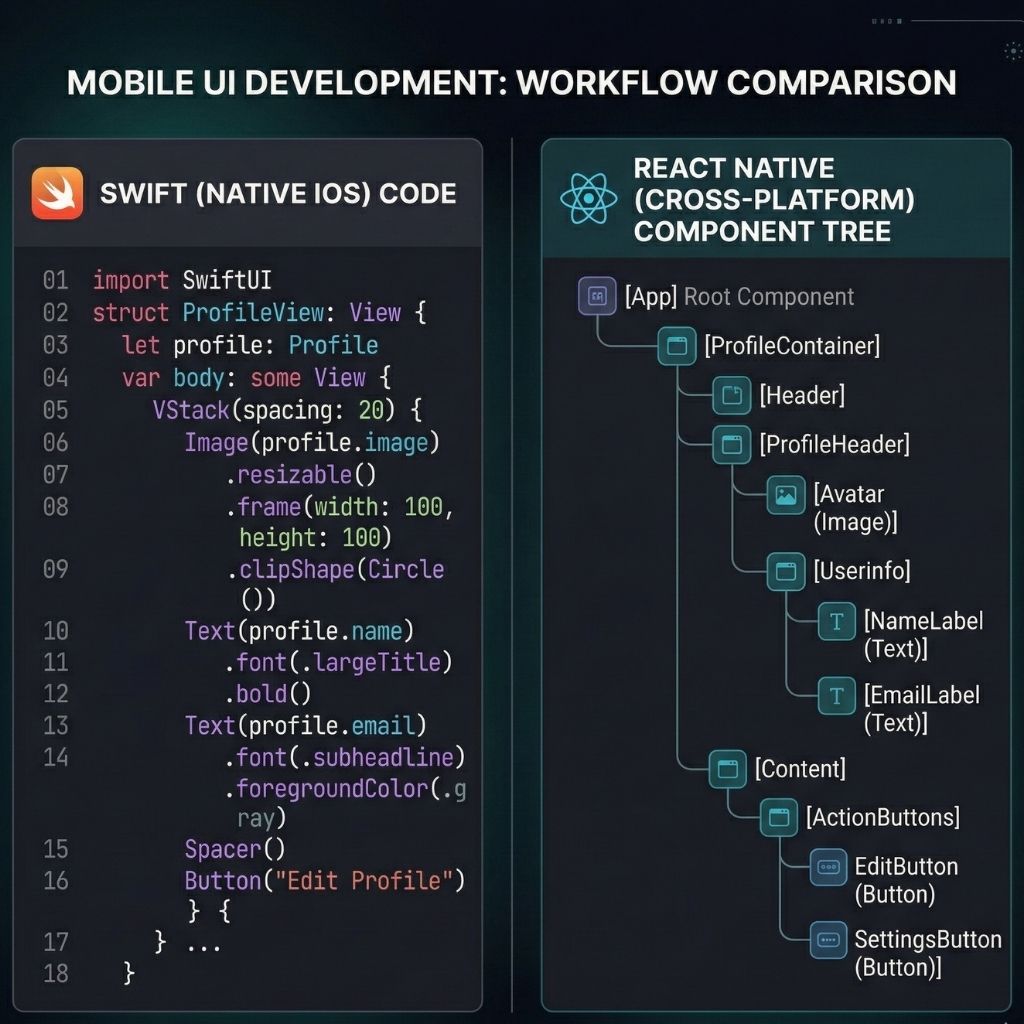
When a company decides to build a mobile app, the first technical hurdle is often the most confusing: should we build natively for iOS and Android, or use a cross-platform framework? It’s a debate that pits development speed and cost against ultimate performance and user experience. Making the wrong choice early on can lead to massive technical debt, sluggish performance, or the need to completely rebuild your app a year after launch.
Defining the technical divide
Native development involves writing code specifically for one operating system—Swift for iOS, and Kotlin for Android. This gives your app direct access to the device’s hardware, resulting in the smoothest possible animations and fastest load times. Cross-platform development, using frameworks like React Native or Flutter, allows you to write one codebase that deploys to both Apple and Google devices simultaneously.
You’ll typically see early-stage startups leaning heavily into cross-platform builds to get to market twice as fast, while enterprise banking or high-end gaming apps stick strictly to native builds for maximum security and performance.
The evolution of the cross-platform compromise
Five years ago, users could instantly spot a cross-platform app. They often felt clunky, scrolling wasn’t quite right, and they drained batteries faster. The compromise for saving development money was a noticeably degraded user experience. However, modern frameworks have closed this gap significantly.
Today, apps built on React Native or Flutter can achieve near-native performance for 90% of standard business use cases. Unless your app relies heavily on complex 3D rendering, intensive background processing, or very specific bluetooth hardware integrations, the end-user will rarely know they aren’t using a fully native application.
Choosing your development path
Your business goals should dictate your technology stack. If your primary objective is validating a market quickly and launching on both app stores with a lean budget, cross-platform is almost always the right choice. If your product is the technology—requiring cutting-edge augmented reality, heavy video processing, or flawless micro-interactions—investing the time and capital into native mobile application development is the only way to ensure your product doesn’t feel compromised.