
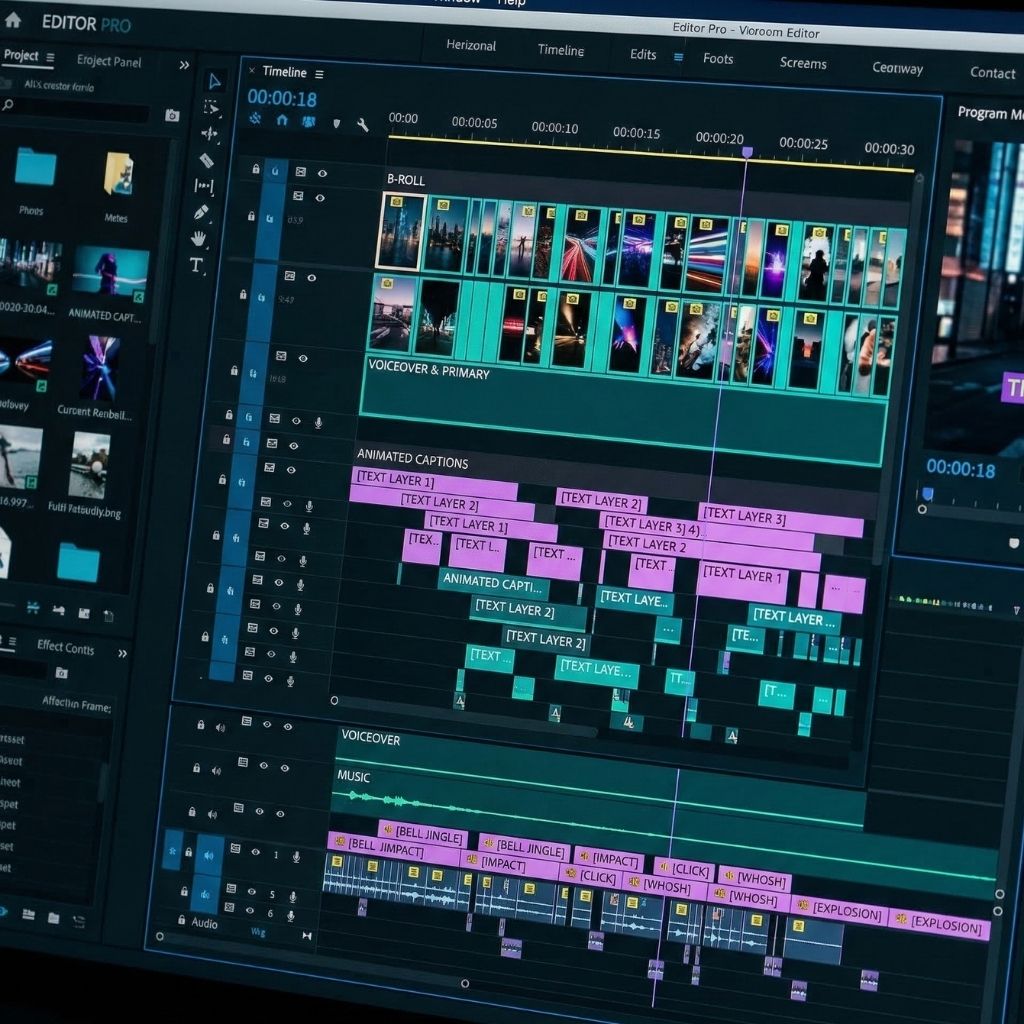
In the frantic world of short-form content systems, marketers obsess over the first three seconds of a video. We script bold statements, add aggressive text overlays, and use trending audio just to stop the scroll. But a brilliant hook followed by boring, slow-paced content is actually detrimental to your account. You might get the initial view, but when the viewer drops off at second 4, the algorithm penalizes your video for poor retention.
The promise and the payoff
Every hook makes a psychological promise to the viewer. If your text says, “Here are 3 tools that will save you 10 hours a week,” the viewer’s brain expects a fast, dense, and highly valuable payoff. The biggest mistake creators make is dragging out the introduction.
You’ll typically see amateur videos waste precious seconds with filler language like, “Hey guys, so today I wanted to talk about a few things that really helped me…” In short-form video, you must ruthlessly eliminate all conversational filler. The moment the hook is delivered, you must instantly rapid-fire the value.
Editing for dopamine
Retaining a viewer for 30 seconds requires continuous visual and auditory stimulation. This is where advanced editing within your short-form content systems becomes critical. You cannot simply rely on the speaker’s charisma.
To engineer the payoff, the editor must introduce pattern interrupts every 3 to 5 seconds. This could be a slight camera zoom, a B-roll overlay, a sound effect emphasizing a key point, or a pop-up graphic. These constant micro-changes reset the viewer’s attention span, making it incredibly difficult for them to swipe away before the video concludes.
The final call to action
If you have successfully hooked the viewer and retained them through the payoff, you have earned the right to make a split-second ask. However, asking them to “link in bio to read my blog” is too much friction for a TikTok user. A strong, native call-to-action is simple and platform-specific, such as “Save this for your next meeting” or “Hit follow for part 2.”