
One of the biggest hurdles founders face when launching a personal brand is the blank page. They stare at LinkedIn and think, “I run a supply chain logistics company; nobody cares what I had for breakfast.” And they are right. The secret to a sustainable personal brand is not talking about your daily life; it is developing a rigid set of “Content Pillars” that guide your messaging, establish your authority, and attract your exact target market.
Defining your core content pillars
A content pillar is a specific, recurring theme or topic that you own. An effective founder brand usually relies on three to four distinct pillars. Pillar 1 should always be “Industry Expertise”—your unique, contrarian, or deep-dive insights into the market you serve. Pillar 2 is often “Company Building”—sharing your framework for hiring, scaling, and managing culture. Pillar 3 is “Personal Philosophy”—your unique approach to leadership, productivity, or mental models.
You’ll typically see that by sticking strictly to these pillars, founders train their audience on what to expect. Followers stick around because they know exactly what kind of value they will extract from following you.
The 80/20 rule of promotional content
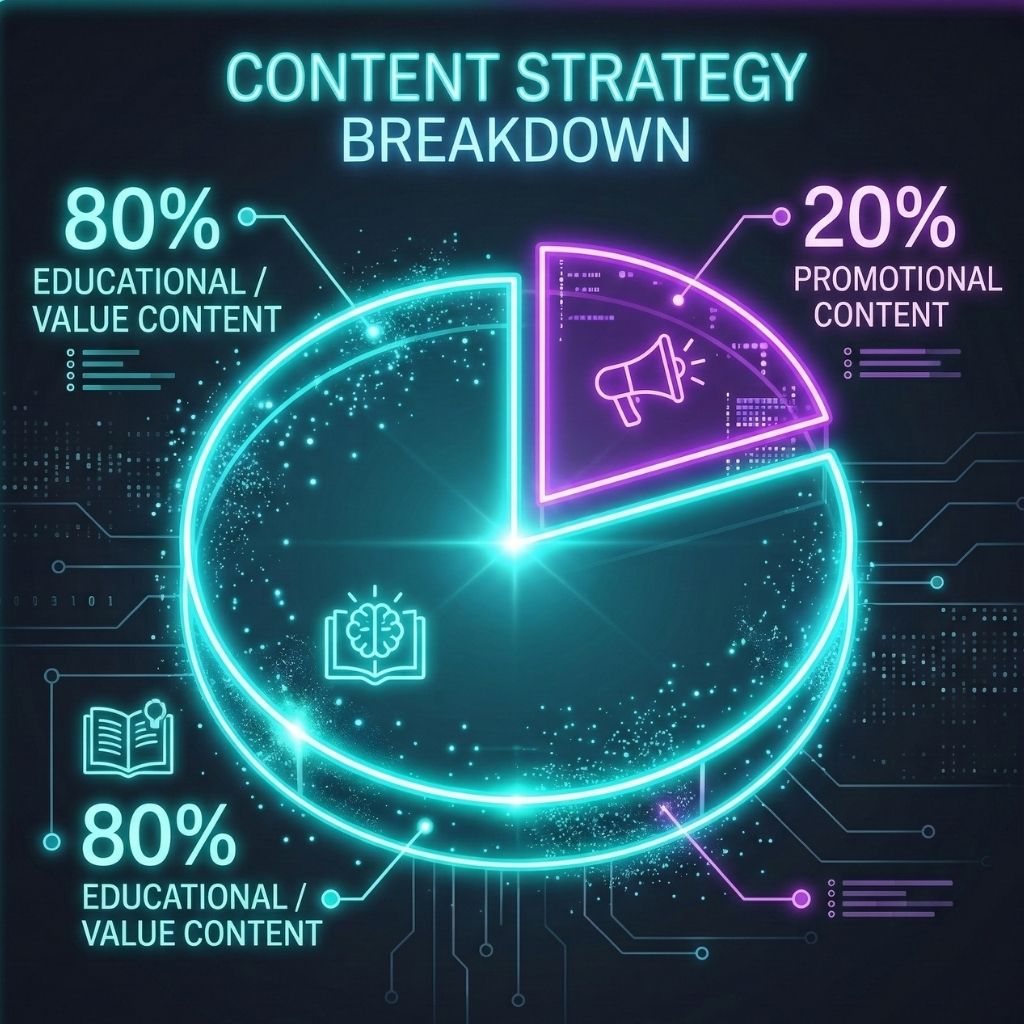
Founders often struggle with the balance between giving value and selling their product. If your feed is a constant stream of “Buy my software” or “We just won this award,” your audience will tune out. A strong personal brand operates on the 80/20 rule.
80% of your content should be purely educational, entertaining, or insightful, asking for absolutely nothing in return. This builds immense goodwill and trust. The remaining 20% can be “soft-promotional”—sharing a case study, celebrating a company milestone, or directly inviting your audience to book a demo. Because you have provided so much upfront value, the audience is far more receptive when you finally make an ask.
Syndicating your pillars across channels
Once your pillars are established, content creation becomes a scalable system rather than a daily guessing game. If your pillar topic for the week is “remote culture,” you can write a long-form LinkedIn newsletter about it, extract the key points for a Twitter thread, and record a short-form video summarizing the concept. This ensures your core messaging remains laser-focused and omnipresent across every marketing channel your target audience touches.